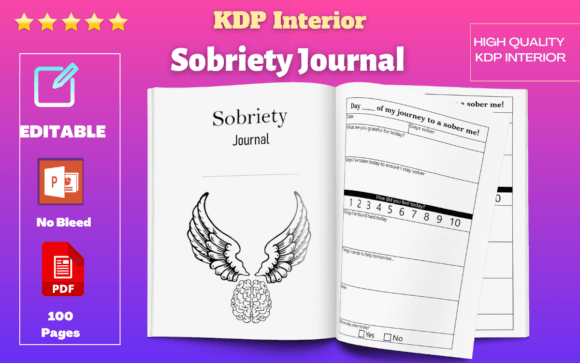
Sobriety Journal KDP Interior: Designing for Recovery
Imagine a tool that not only guides a personal journey but also represents a pinnacle of thoughtful, user-centric design. The Sobriety Journal KDP Interior and Inspirational Quit Drinking Prompted Notebook is precisely that—a meticulously crafted workbook where visual design and therapeutic function merge to create a powerful aid for addiction recovery. For designers and creators, this product exemplifies how strategic layout, typography, and visual hierarchy can transform a simple notebook into an engaging, life-changing experience.
Visual Communication in a Healing Context
At its core, this journal is a masterclass in applying graphic design principles to sensitive content. The interior design prioritizes clarity and calm, using a clean layout that avoids visual clutter. This approach is critical for users who may feel overwhelmed; the white space and thoughtful typography guide the eye gently from one prompted section to the next, reducing cognitive load and encouraging consistent use. It’s a direct application of UX design principles, where every element serves to support the user’s goal: tracking sobriety, gratitude, and personal goals for a more organized life.
Practical Applications Beyond the Page
The structured, professional presentation of this journal interior makes it a versatile asset for various creative projects. Its design philosophy can inspire or be adapted for numerous applications where clarity, motivation, and positive reinforcement are key.
- Branding and Identity: The journal’s consistent aesthetic can inform the visual identity for wellness brands, counseling services, or recovery apps, establishing a trustworthy and supportive tone.
- Editorial and Print Design: The layout techniques are directly applicable to designing planners, wellness guides, and self-help workbooks, ensuring readability and user engagement.
- Digital Product Design: The logical flow and prompt-based structure can be translated into UI/UX for mobile apps focused on habit tracking, mindfulness, or personal development.
- Marketing Materials: The journal’s inspirational tone and clean visuals provide a template for creating compelling social media graphics, brochures, or website content for health and wellness campaigns.
Evaluating and Implementing Design Elements
When selecting or creating similar design assets, several factors ensure effectiveness and quality. This journal interior demonstrates best practices that are universally applicable.
- Consistency and Scalability: The use of a resized vector format ensures the design remains crisp at any size, from its native 6"x9" print dimension to digital displays. Consistent styling across all 100 pages builds user trust and professional credibility.
- Typographic Hierarchy: Notice how different font weights, sizes, and possibly styles create a clear visual hierarchy. Section headers, daily prompts, and space for personal notes are distinctly differentiated, guiding the user effortlessly through the content.
- Functional Aesthetics: Every design choice—from the no-bleed layout for clean printing to the high-quality resolution—serves a practical purpose. The aesthetic is not merely decorative; it enhances functionality and user experience.
- Audience-Centric Design: The entire composition is built with its end-user in mind. The prompts are thoughtful, the tracker is organized, and the overall feel is supportive, demonstrating a deep understanding of the audience's emotional and practical needs.
In the realm of modern graphic design, the most impactful work often solves real human problems. The Sobriety Journal KDP Interior stands as a testament to how thoughtful visual design, professional typography, and a user-focused layout can create a product that is not only aesthetically pleasing but also profoundly useful. By studying and applying these principles—consistency, clarity, and compassionate design—creators can develop assets that truly resonate, enhance communication, and provide tangible value in people’s lives, whether for personal recovery, brand building, or broader creative projects.